
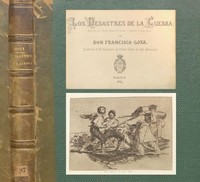
Los Desastres de la guerra: by Francisco Goya
Francisco Goya's Los Desastres de la Guerra isn't a storybook in the traditional sense. Published after his death, it's a series of 82 etchings created in response to the brutal Peninsular War (1808-1814) and the famine in Madrid that followed. There's no linear plot with a hero's journey. Instead, each image is a brutal, self-contained scene from a national nightmare.
The Story
The 'story' is the collapse of society. The series opens with the grim reality of conflict—citizens fighting soldiers with crude tools, executions, and chaotic violence. It doesn't glorify any side. Then, it plunges into the consequences: widespread starvation, bodies piled in the streets, and the exploitation of the vulnerable. The final images move into allegory, showing a bleak, hopeless world where justice is buried and monsters reign. It's a visual documentary of suffering, from the first spark of rebellion to a despairing look at a broken future.
Why You Should Read It
This is art that refuses to let you look away. Goya isn't interested in painting kings or celebrating victory. He's in the mud and the blood with the victims. What gets me is his focus on the human face—the blank stare of a starving child, the twisted agony of a man being executed, the hollow eyes of a woman searching a corpse. He makes the abstract horror of 'war' painfully specific. It's not about who won, but about what was lost. The captions, like 'I saw this' or 'This is worse,' feel like a direct, furious conversation with the viewer. It’s a brutal, essential reminder of the true cost that history books often smooth over.
Final Verdict
This isn't for a casual bedtime read. It's a challenging, essential experience. Perfect for anyone interested in history, art, or human nature at its most raw. If you've ever wondered how an artist can respond to atrocity, this is the definitive answer. It's also for readers who appreciate graphic novels or photojournalism—Goya was a pioneer of visual storytelling with a conscience. Be warned: it's grim. But its power lies in that unflinching honesty. It's a book you don't just see; you feel it in your bones long after you've closed the cover.
This content is free to share and distribute. You can copy, modify, and distribute it freely.
Aiden Thomas
1 year agoGreat read!
Andrew Davis
10 months agoI came across this while browsing and the flow of the text seems very fluid. A valuable addition to my collection.
Thomas Lewis
1 year agoTo be perfectly clear, the emotional weight of the story is balanced perfectly. Highly recommended.





Ava King
1 year agoI was skeptical at first, but it challenges the reader's perspective in an intellectual way. Highly recommended.